
Concerns regarding tick populations have been raised nationwide by entomology researchers and public health officials, primarily because of unusual winter weather patterns and this erratic spring. Does a mild winter explode or reduce tick numbers? We don’t know—yet.
The concern is higher in the American Northeast and Upper Midwest, where deer tick-borne disease rates are highest, but ticks proliferate in every state. The West and Colorado may have a lower incidence of tick-borne disease than other parts of the country, but awareness and education are essential in a rural area like our own.
To that end both the Colorado Department of Health and Environment (CDHE) and the Custer County Public Health Agency (CCPHA) provide ample resources. For example, CCPHA will be part of the Kid’s Council 7th Annual Family Fun Day on Saturday, June 6. At this free community event CCPHA staff will provide an entertaining and educational program on preventing tick-borne disease, recognizing ticks and tick environments, and precautions for summer travel to areas where tick populations and the diseases they spread are more prevalent. “We want this to be fun info for all!” says CCPHA.
The CDHE website on tick-borne disease in Colorado is quite extensive and informative (cdphe.colorado.gov), covering detailed material from identifying ticks to known tick distribution areas to safely removing ticks.
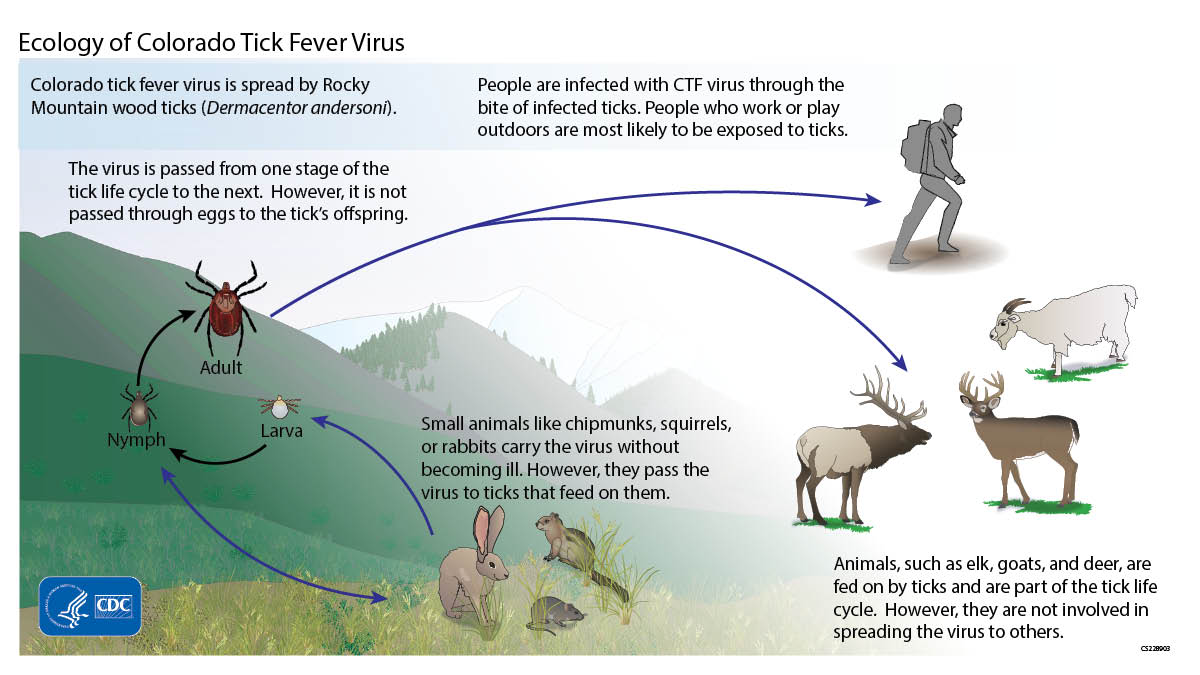
Top of the list are Colorado tick fever and Rocky Mountain Spotted Fever, rare viral diseases spread by the bite of an infected tick. Common symptoms are fever, rash, chills, headache, body aches, and fatigue. The range of severity goes from mild disease and recovery to the rare instances of central nervous system disorders and death.
Although Yale University School of Medicine researchers have been working on developing an anti-tick vaccine, it is not expected to become available for several years to come. The avenue of research is intriguing though—ticks release myriads of proteins, some of which numb the bite site and suppress immune responses, but some animal species have developed tick resistances that interfere with the ticks’ feeding, forcing them to detach. Discovering which of these protein resistances might transfer by vaccine to humans will take some time.
What we Valley folk can do now however, is to be aware of tick bite prevention, and if bitten, how to remove the tick. For the former, common sense prevails: if you’re going to be in high grass or forest during tick season, stay on trails, rather than bushwhacking, and prepare wisely. That is, use insect repellant, wear light colored leg coverings, tuck your pants into your socks, and wear long sleeves. Check your body immediately after an outing.
Tweezers are the recommended tool for tick removal, rather than one’s fingers. Removal quickly is also recommended; although some of the diseases carried by ticks may not manifest for three to five days as they feed, some kick in in 15 minutes or so.
If you have the tick whole, you may submit it for analysis through CDHE; forms and information are on their website.
Tick experts don’t seem to know anything definitive about higher risk of tick bites among pet owners; there is some positive correlation, however, so pet owners might take further precautions. Among them, using effective anti-tick products for your pet. If a tick makes it into your house on your pet, the human risk is small; if a tick falls off your pet, it will most likely dry out and die.
Besides, if the tick is full of canine blood, it’s not going to be interested in you.
So, tick season is here, but serious as tick-borne disease is, awareness and prevention go a long way towards staying calm, enjoying the outdoors we’re gifted with here, and summering on!
– W.A. Ewing